Jordan Clarkson is coming back to the NBA champion New York Knicks on a one-year, veteran-minimum deal worth $3.9 million, per The Athletic’s James L. Edwards III and Zach Powell.
The reunion makes sense on paper – a proven rotation piece re-signing with a title winner at minimum cost. But the deal surfaces a question the Knicks front office hasn’t fully answered about their championship roster’s long-term depth ceiling.
The Clarkson Deal – What the $3.9M Actually Means for the Knicks
The $3.9 million figure is reported as a veteran’s minimum agreement for Clarkson, aligning with the going rate for experienced veteran depth rather than a discount.
The cap implications are clean. The Knicks get a veteran presence at a reported solid price point, preserving flexibility for any remaining roster construction moves this offseason. Per The Athletic’s reporting, this is Clarkson’s first season with New York after arriving via Jazz buyout in summer 2025.
That trajectory tells its own story. Clarkson embraced a lower-usage role in New York rather than seeking a larger on-ball opportunity. He got the ring. Now, at this stage of his career, he’s accepting another minimum rather than testing a market that has clearly decided his ceiling. Full stop.
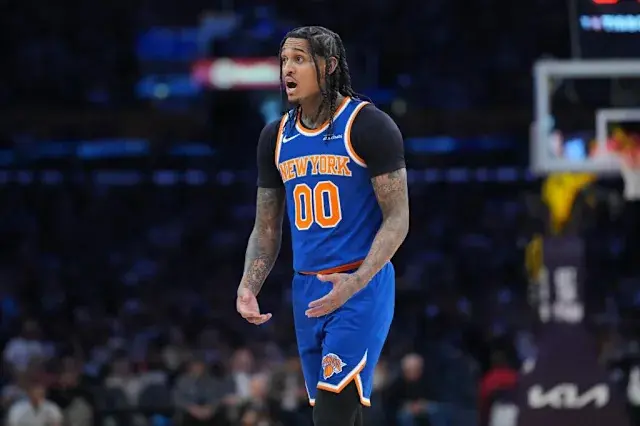
The Role Model – What Clarkson Actually Does on the Floor
Clarkson averaged 8.6 points, 1.3 assists, and shot 45 percent from the field across 72 games in 2025-26 – his lowest scoring average after posting double-digit numbers in each of his previous 11 seasons. That context is critical to understanding what he actually is in New York.
The Knicks didn’t sign him to be the microwave scorer who averaged north of 15.6 points in his quietest Utah season. They signed him to space the floor for Jalen Brunson and Karl-Anthony Towns, provide a defensive spark in spot minutes, and serve as a steadying veteran presence for a rotation that runs deep with star talent. He embraced that deliberately reduced role – and the numbers reflect it.
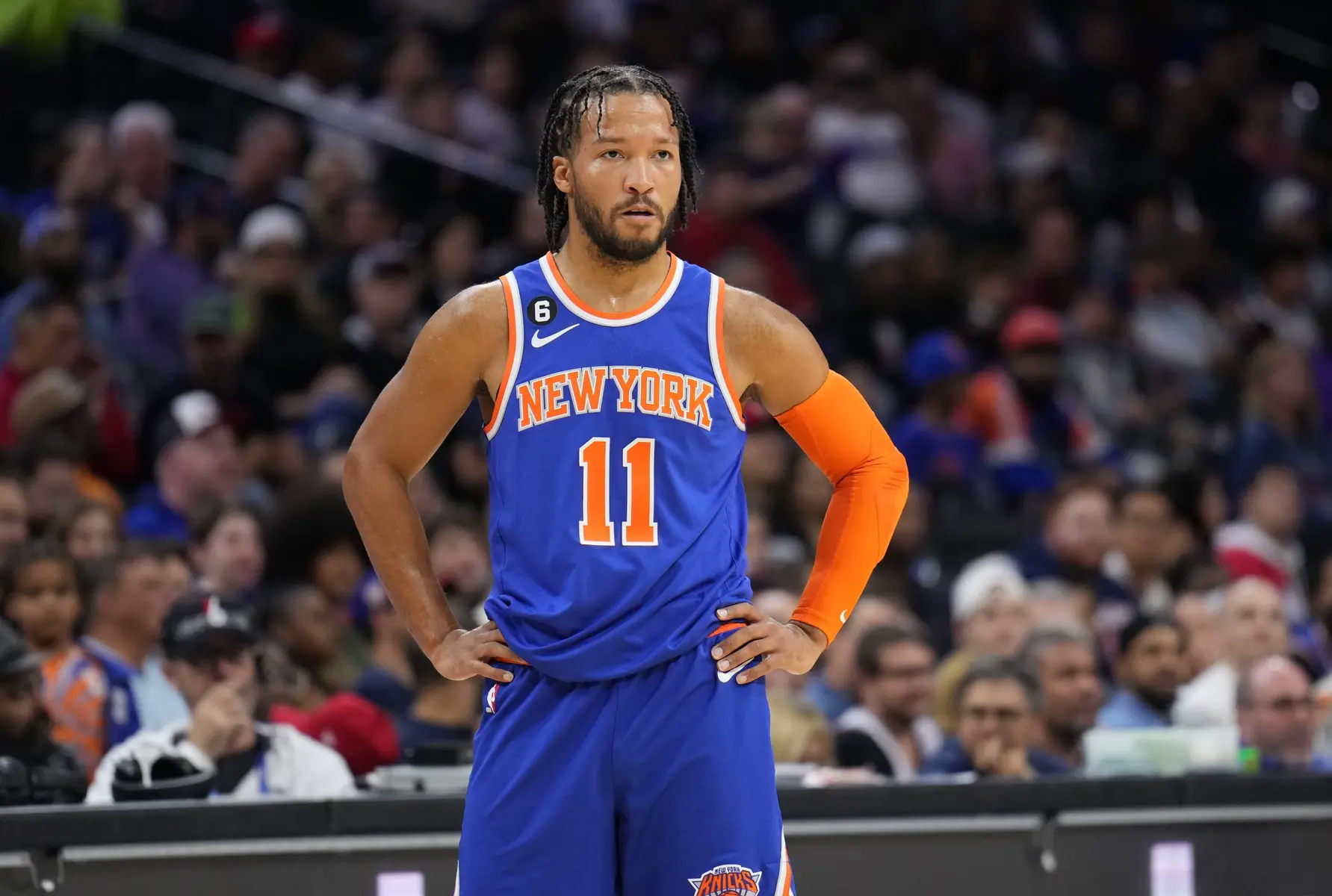
His championship pedigree runs beyond just this Knicks title. Clarkson played alongside LeBron James in Cleveland during the 2017-18 season and alongside Kobe Bryant with the Lakers from 2014 to 2016. That experience in winning and high-pressure environments is genuinely valuable organizational currency, not just a biographical footnote.
The limitation is obvious: Clarkson is no longer a high-volume offensive creator. The Knicks are treating him as a complementary scorer rather than a primary source of offense, so if the team needs more shot-creation from him, the production gap can widen quickly.
The Uncomfortable Question – Why His Age Leaves One Variable Unanswered
Here is the question the signing doesn’t answer: what does New York’s bench look like if Clarkson regresses mid-season or misses time? The Knicks are betting on a player whose scoring average dropped to its career low while their core handled the heavy lifting. That bet works – until it doesn’t.
Clarkson has been durable, appearing in 72 games last season. But another veteran-minimum deal for an older player coming off a deliberately reduced role is not a depth strategy – it is a culture retention move dressed as roster construction. The Knicks are leaning on what he represents as much as what he produces.
The specific scenario where this blows up: Brunson misses time – and New York suddenly needs Clarkson to log 25-plus minutes and generate offense consistently. At his current usage level, that ask produces a very different player than the one who thrived in a complementary role alongside All-Stars. That variable has not been addressed by this signing. Full stop.
The Knicks Situation – How the Roster Actually Looks Now
Clarkson’s return solidifies the primary championship core. The rotation picture around him, though, is the lingering construction question heading into 2026-27.
- Jalen Brunson – Knicks stars; Clarkson’s floor-spacing directly benefits Brunson’s pick-and-roll operations
- Karl-Anthony Towns – spacing the floor; Clarkson’s shooting keeps defenses honest at the second unit level
- Mikal Bridges and OG Anunoby – forwards whose offensive limitations make Clarkson’s scoring punch more relevant off the bench
- Jordan Clarkson – complementary bench scorer and veteran locker room presence; not a load-bearing offensive piece, but a functional rotation anchor at minimum cost
The Knicks are deeper at the top than almost any team in the league. The question is whether the supporting cast beyond those four stars and Clarkson has enough juice to sustain a title defense over an 82-game grind.
Fantasy Managers – What Clarkson’s Signing Changes for Your Roster
Fantasy managers may want to monitor how Clarkson’s minutes and usage evolve as the rotation tightens around the Knicks’ core, especially if Brunson misses time. Beyond that, role and minutes will be the main drivers of any fantasy value swing.
Betting the Knicks – What Clarkson’s Signing Means for the Lines
Betting angle: Clarkson’s return can be read as a roster-stability signal that keeps the team’s championship culture intact rather than a move that dramatically changes the Knicks’ on-court identity by itself.
Betting angle: With Clarkson’s role described as a lower-usage complementary scorer, any points-per-game market sensitivity would depend on how the Knicks’ rotation is ultimately structured around their core.
Betting angle: Knicks championship futures remain something to watch, but this signing primarily reinforces continuity as New York evaluates the rest of its bench depth.
The Verdict – A Smart Retention Move With One Structural Hole Still Unfilled
The Knicks made the right call bringing back Jordan Clarkson at $3.9 million. He fits the system as described by The Athletic and adds genuine veteran championship experience to the locker room. At the veteran minimum, the risk is minimal.
The uncomfortable reality is that this signing is roster maintenance, not roster improvement. A complementary scorer on his second consecutive minimum deal is a placeholder, not a solution to any depth concern that emerges when the core gets tested by injuries or a playoff grind. The Knicks need to answer that structural question elsewhere this offseason – and Clarkson’s deal doesn’t buy them time to ignore it.
The next hard checkpoint is the completion of New York’s offseason roster, specifically whether additional veteran-minimum additions address the bench scoring depth question that Clarkson alone cannot solve. Keep an eye out on NYSD for further updates on Jordan Clarkson and the Knicks as this situation develops.
About the Author