
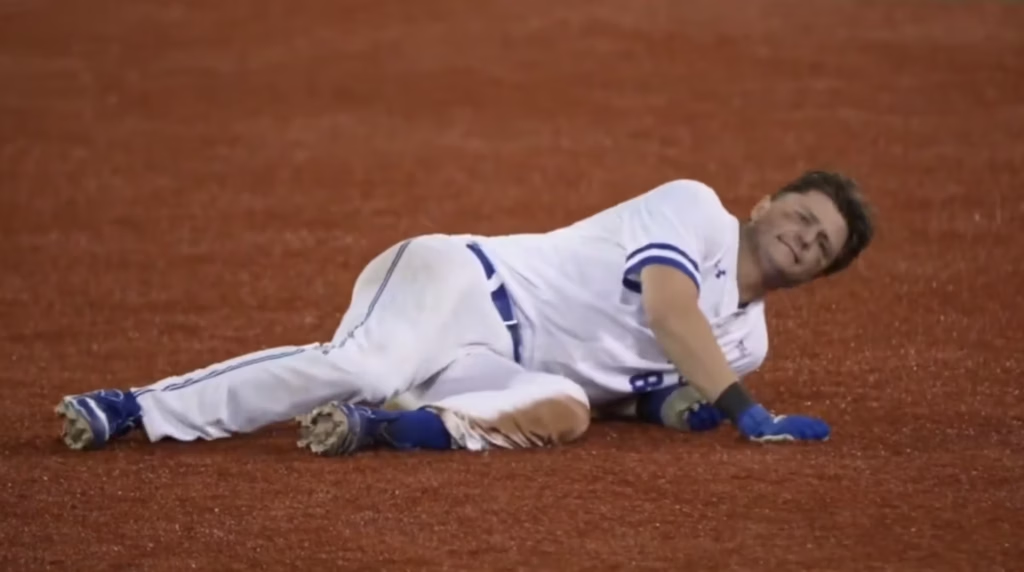
Baseball is a game defined by its routine. You hit the ball, you run the bases, and you touch home. It is a sequence players repeat thousands of times from T-ball to the pros. But every so often, the routine breaks in a way that reminds us how fragile the human body really is, even in a moment of pure triumph.
On Friday night at the Puerto Rico Challenge, Seton Hall junior Justin Ford lived out every ballplayer’s dream and nightmare in the span of thirty seconds. With the Pirates trailing Boston College in their season opener, Ford stepped up in the fifth inning and crushed a go-ahead two-run blast. It was a no-doubter to left-center that should have been the highlight of his young career. Instead, it became the final play of his 2026 season.
Seton Hall Baseball Injury Video Goes Viral After Justin Ford Home Run Trot
https://twitter.com/dugoutforever/status/2022672316589838739
The 6-3 outfielder from Roxbury, New Jersey, had fought his way into the starting lineup after showing glimpses of power last spring. He took a first-pitch fastball and drove it deep into the Ponce night, but as he rounded first base, his leg simply gave out. There was no collision and no sliding. It was a freak, non-contact injury that left Ford collapsed on the dirt while the ball was still bouncing in the bleachers. The visual was gut-wrenching, as the medical staff eventually had to stretcher him off the field while his teammates looked on in stunned silence.
The Pirates announced shortly after that Ford would miss the remainder of the year. For a kid who had worked all winter to earn that spot in the order, seeing it end on the very swing that gave his team the lead is a level of sports cruelty that is hard to stomach. The box score will show a home run and two RBIs, but it won’t show the physical and emotional toll of a season ending before the first game even reached the ninth inning.
Seton Hall vs Boston College Score Overshadowed by Season-Ending Injury
While the injury cast a long shadow over the game, it also triggered a rare application of the NCAA rulebook. Most fans know that you have to touch all four bases for a home run to count. If a player cannot physically make it around the diamond, the game doesn’t just stop. Under Rule 6-5, if an injury occurs during a home run hit out of the playing field, a substitute runner is permitted to complete the play.
Jake Lopez was the man called upon for the most somber pinch-running appearance you will ever see. He stepped in where Ford fell and finished the remaining 270 feet of the trot. It ensured the runs stayed on the board, giving Seton Hall a 4-3 lead at the time. The Pirates, who were +150 underdogs with sportsbooks, would eventually fall 6-4 to the Eagles. It was a clinical execution of the rules during a moment that felt anything but clinical.
NCAA Baseball Rules Allow Substitute to Complete Home Run Circuit
We have seen these moments before, though they never get easier to watch. Most fans remember the 2008 Western Oregon softball game where the opposing team famously carried Sara Tucholsky around the bases after she tore her ACL on a home run. In the NCAA baseball world, the rule is designed to ensure the hitter still gets credit for the accomplishment even when their body betrays them. Ford earns the home run in the stat sheet, and Lopez gets the peculiar distinction of scoring a run without ever having an at-bat.
As Seton Hall moves forward with the rest of the Puerto Rico Challenge, they do so with a massive hole in their outfield and a heavy heart for their teammate. Baseball is usually a game of “next man up,” but when the “next man” has to finish a home run trot for a friend being loaded into an ambulance, the game feels a lot heavier than usual. Justin Ford hit the ball of his life on Friday night. It is just a shame he never got to feel his foot hit home plate.
About the Author
